 19 Ryde Road, Pymble, NSW 2073

Brachycephalic Airway Surgery (BOAS) at Gordon Vet Hospital
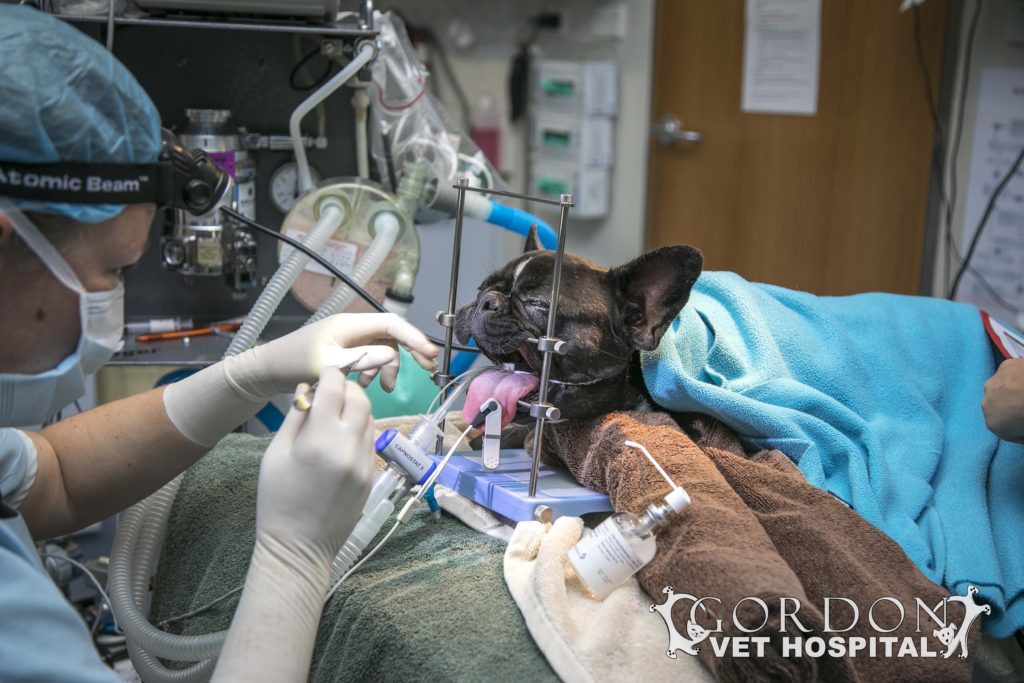
At Gordon Vet Hospital, one of our amazing vets, Dr. Jenna Baker, offers brachycephalic airway surgery.
What is Brachycephalic Airway Surgery?
This procedure, commonly known as the acronym BOAS (Brachycephalic Obstructive Airway Syndrome), is a multi corrective surgery to allow for better breathing, airflow and airway function in specific breeds of dogs. It focuses on 3 main areas of the airway: The nares (nostrils), soft palate, and tonsils.
Stenotic Nares (narrow nostrils) are widened during the procedure, the soft palate can be resected (partially removed or shortened) and the tonsils removed if they are considered to be causing obstruction to the airway. Each individual patient is assessed to decide what areas need surgical correction.
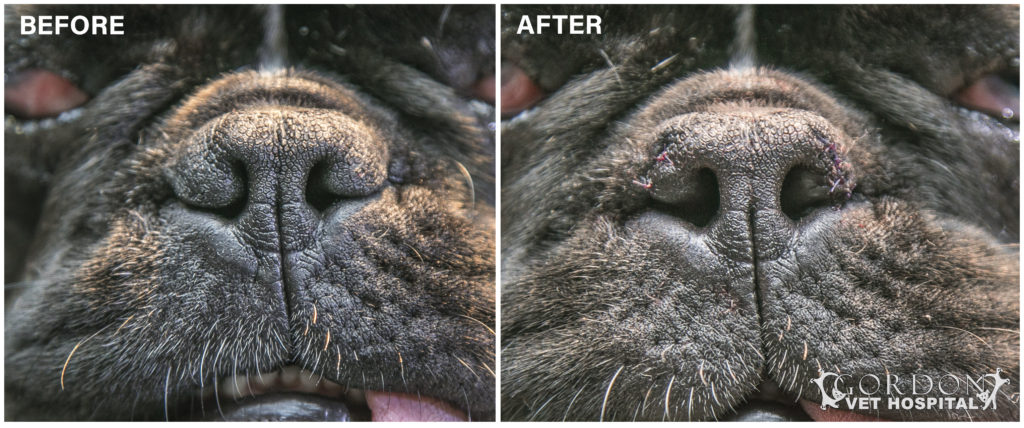
This image depicts the before and after of widening the nares (nostrils) during BOAS surgery.
What is BOAS and what breeds of dogs are likely to be affected by it?
BOAS is a genetic disorder found in almost all of our brachycephalic (meaning short-headed) breeds of dogs. As specific breeds have been selectively bred for their “pushed in” or “flat” faced looks, this has unfortunately resulted in a shortened skull and therefore condensing of the airway.
Most commonly, the breeds we see most affected and needing surgical correction are French Bulldogs, British Bulldogs, Pugs & Boston Terriers, however any brachycephalic breed can be susceptible to inheriting these genetic flaws that require correction.
The image below is an anatomical comparison of a non-brachycephalic vs brachycephalic skull and airway.

What are the signs my dog is affected by BOAS and may need surgical correction?
The most common signs that dog owners will report seeing when their dog needs airway surgery:
- Snoring
- Excessive panting or rapid breathing at rest or with minimal exercise
- Sudden collapse after exercise and intolerance to exercise
- General “noise” when breathing, loud breathing even when asleep
- Overheating
- Vomiting or regurgitation
Brachycephalic Airway Surgery is not considered a cure for these issues but can greatly improve a dogs quality of life and significantly reduce the risks of breathing related health issues. BOAS symptoms often progress throughout the life of affected dogs and can create life threatening issues if left without intervention.
At what age should I consider booking my dog in for surgery?
Brachycephalic Airway Surgery is best done sooner than later. The ideal age for surgery is between 6 months to two years of age. If you own or are considering owning a brachycephalic breed of dog, speaking to our vets at their 12 or 16 week vaccination consultations is a great first step in assessing your pets needs for surgery and understanding when is best to proceed with surgery, however any dog affected by the symptoms of BOAS regardless of age should see a vet and be assessed for their need for surgery.
Booking a consultation with Dr. Jenna to make an individual assessment of your pet is necessary. The approach to surgery is a case by case basis, and the overall health of your pet is considered prior to recommending surgery. If you would like to book with Jenna, please click here
What type of aftercare is required post surgery?
Generally speaking, care requirements post surgical procedure are minimal. The first 24 hours after your pet’s procedure is considered the most critical, as they are recovering from both general anesthesia and their airway is the affected surgical site.
Some patients may be recommended for overnight care and monitoring with a 24-hour vet care team (Northside Emergency Vet) for the first night, as a precaution for their recovery, however some patients return home in the evening after surgery.
At home, post-op care will look like strict rest, keeping calm, cool and quiet and feeding a soft food only diet for the first two weeks. During this time, we will schedule a post-op check up to ensure recovery is on track. Our vets will let you know when your pet can return to normal activity levels and their regular diet.
For more information please give our team a call on 9498 3000 or please click here to book an appointment